
Centering Local Leadership: A Decade of Human Rights Accompaniment in Kenya
By Marc Bontemps, Member of Peace Brigades International Council
Ten years ago, Peace Brigades International (PBI) began its accompaniment work in Kenya, responding to the urgent needs of marginalized communities. In these areas, residents frequently faced severe challenges, including disappearances and extrajudicial killings that were often overlooked or dismissed by the justice system.
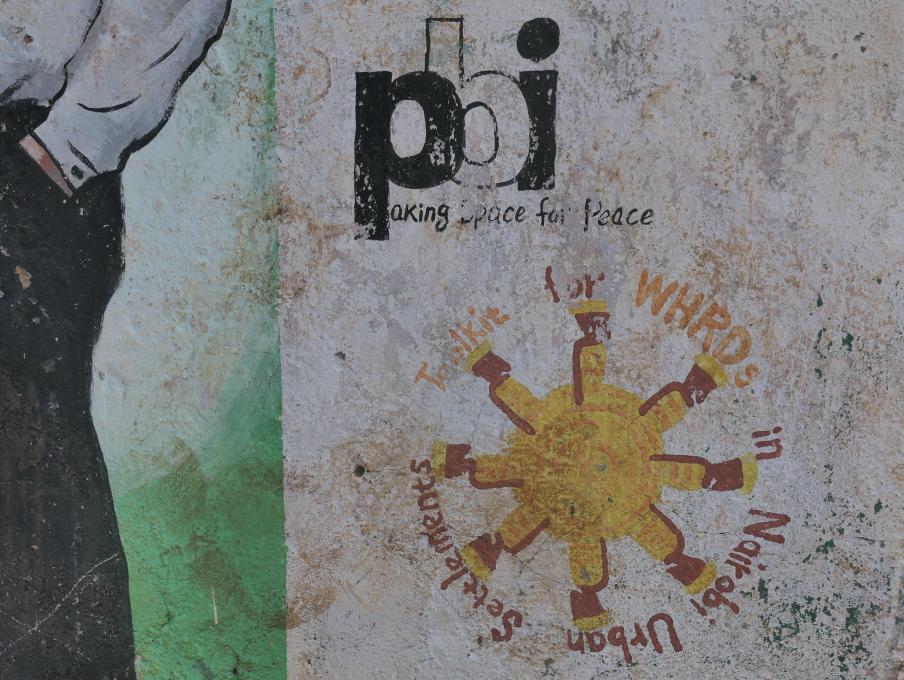
In response, PBI developed a participatory ‘Toolkit’ and began training local human rights defenders as ‘Toolkit Organisers’ (TOs). These community leaders voluntarily organize local meetings and support advocacy campaigns addressing the specific, self-identified concerns of their neighbors. Today, PBI-Kenya is active in 10 communities, with 15 new TOs currently undergoing training to expand this vital grassroots network.
Over the past decade, PBI has also cultivated long-term, horizontal partnerships with local ‘social justice centres’. These community-based human rights hubs provide essential support to residents and play a crucial role in documenting and challenging police violence.
The PBI-Kenya team works alongside these TOs, providing accompaniment, mentoring, and coaching. Together, they actively contribute to the ‘Missing Voices’ network, which documents disappearances. Last year alone, they gathered substantiated evidence for approximately 150 cases, while acknowledging that many more incidents likely remain unreported due to systemic barriers.
As highlighted in our recent field reports, addressing gender-based violence remains a central priority for PBI-Kenya. Furthermore, this year marks the launch of a vital third area of focus: supporting the rights of Indigenous communities and environmental human rights defenders.
Crucially, PBI-Kenya’s strategy intentionally centers local expertise and leadership. Rather than deploying international volunteers, the project relies on the deep linguistic knowledge, cultural understanding, and lived experience of Kenyan human rights defenders. This community-led approach ensures that our accompaniment is grounded in trust, mutual respect, and the core belief that sustainable human rights protection must be driven by those who know their communities best.