
The 61st session of the Council will take place in Geneva from February 23 to March 31, 2026. Follow us on this page and on social media to keep up with our work.
This article presents the different actions and statements by PBI, implemented as they take place, as well as information about the contexts in which PBI works and the discussions that will take place at the UN.
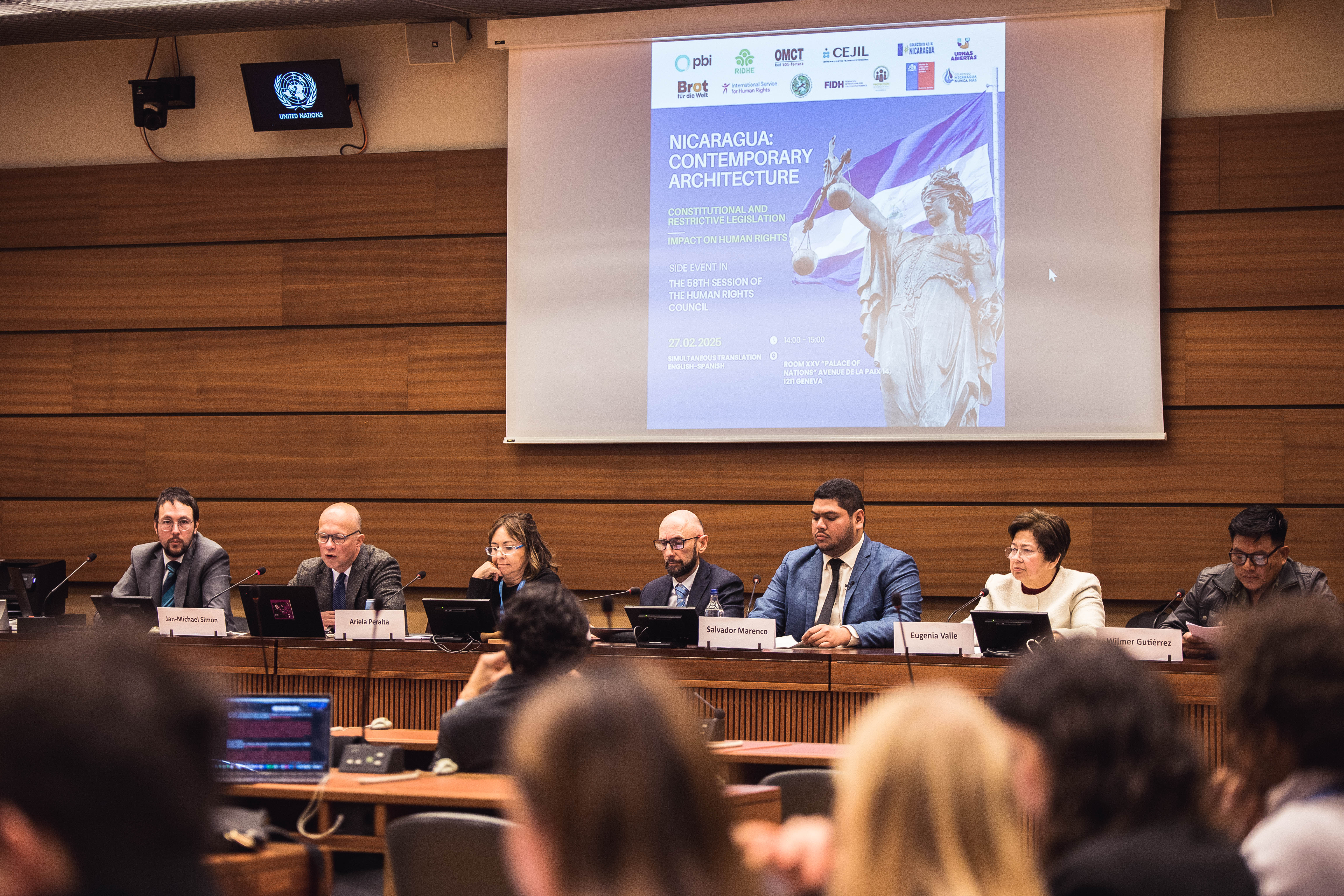
Index:
Colombia
Human rights context in Colombia
Colombia arrives at the 61st session of the Human Rights Council in a context of sustained deterioration of the humanitarian and security situation, marked by the reconfiguration of the armed conflict, the expansion of illegal armed groups, and the proximity of electoral processes.
According to ACLED, Colombia is among the 15 most intense armed conflicts in the world. In 2025, there were 78 massacres with 256 victims, and by mid-January 2026, five additional massacres had already been reported. The Ombudsman’s Office identified at least 11 critical humanitarian emergency hotspots, with illegal armed actors present in 73% of the national territory.
Almost ten years after the signing of the “Total Peace” Agreement in 2016, its implementation remains incomplete and uneven. Opportunities for dialogue with various armed actors have been opened, but sufficient guarantees of respect for international humanitarian law, particularly in relation to the recruitment of minors, have not been established.
Between January and August 2025, there were 109 murders of human rights defenders, as well as 39 murders of signatories to the Peace Agreement during the same year. Between January and June 2025, 342 attacks were documented, including threats, forced displacement, assaults, and disappearances.
Some significant progress has been made, such as the ruling of the Inter-American Court of Human Rights (2023) recognizing the right to defend rights, the approval of the Law on Women Searchers (2024), and the Policy on the Dismantling of Armed Structures (2025). However, implementation remains slow or partial, without a budget or security guarantees.
Colombia in the Human Rights Council
At this session of the Council, the Office of the High Commissioner will present its annual report, detailing its activities in 2025 and the human rights situation in Colombia. This presentation will be accompanied by a General Debate where States and civil society will be able to express their views.
Side event on Colombia
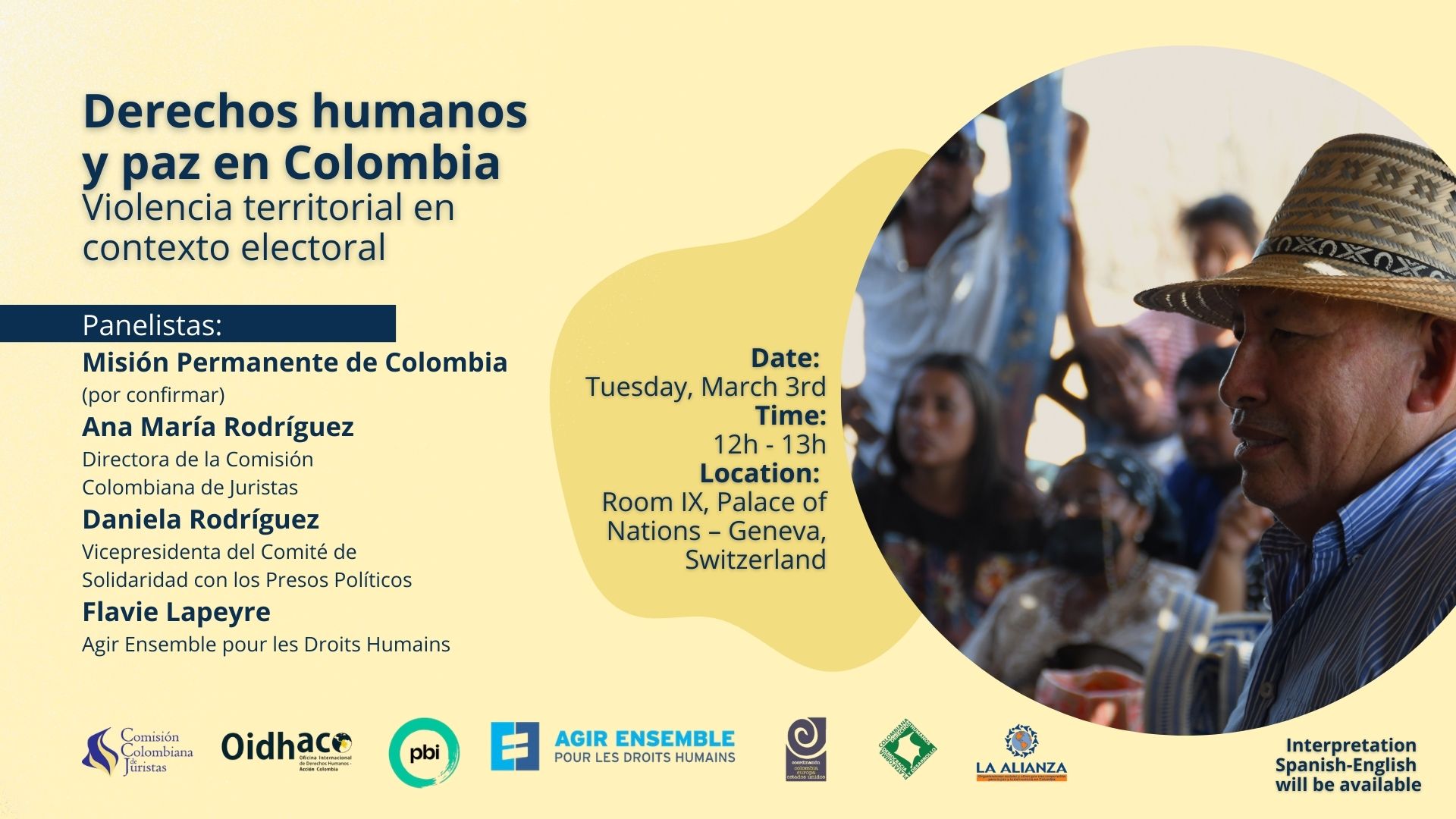
In cooperation with the Colombian Commission of Jurists (CCJ) and the International Office for Human Rights Action Colombia (OIHDACO), PBI will organize a side event at the United Nations that will address the impact of increased territorial violence in Colombia during the electoral period, which particularly affects human rights defenders, social leaders, and communities.
Intervention on Colombia
During the presentation of the Office of the United Nations High Commissioner for Human Rights (OHCHR) report on Colombia, PBI delivered an intervention acknowledging certain advances, such as the regulatory decree for the Law on Women Searchers, while stressing the urgency of ensuring its full implementation. The organization raised concern about the serious situation faced by ethnic and peasant communities in resource-rich territories that are disputed by armed actors and both licit and illicit economies. It also expressed concern about social control, silencing, and the co-optation and infiltration of communities by armed groups, and reiterated the need for a stronger civilian presence of the State in rural areas.
Guatemala
Human rights context in Guatemala
Guatemala arrives at the 61st session of the Human Rights Council in a context of structural democratic fragility. The government of Bernardo Arévalo is attempting to restore institutionality, but networks of power that control key sectors, especially the judicial system, persist. The situation has been exacerbated by violence and prison riots that have led to states of emergency and are perceived as attempts to influence the upcoming judicial elections in 2026.
The crisis of judicial independence is a central concern. International mechanisms—such as OACNUDH, CIDH, and CERD—have documented the use of a co-opted criminal justice system to persecute independent judicial actors, journalists, human rights defenders, and indigenous authorities. There are instances of false criminal proceedings, abuse of pretrial detention, and an intimidating atmosphere that inhibits participation in the selection of senior judicial authorities, threatening the rule of law.
Human rights defenders and indigenous peoples are suffering continuous attacks, threats, criminalization, and murders, which are on the rise, particularly affecting defenders of land and the environment. Ancestral authorities are imprisoned or exiled for defending the constitution, their collective rights, and territories following the post-election crisis of 2023. This pattern is reinforced by extractive projects and forced evictions without prior consultation, in violation of the Constitution, ILO Convention 169, and judicial rulings.
Guatemala in the Human Rights Council
At this council session, the Office of the High Commissioner will present its annual report, detailing its activities in 2025 and the human rights situation in Guatemala. This presentation will be followed by a General Debate where States and civil society will be able to express their views.
In July 2025, the Special Rapporteur on the right to adequate housing, Balakrishnan Rajagopa, visited Guatemala and presented his visit report at the Council session. Following his official visit to the country, the UN Special Rapporteur warned about the systematic use of forced evictions that disproportionately affect indigenous and rural communities, and urged the State of Guatemala to establish a moratorium on evictions until effective legal safeguards, adequate consultation processes, and human rights protection mechanisms are in place.
Meanwhile, the Committee on the Elimination of Racial Discrimination (CERD) also expressed concern about forced evictions and called on the State to take effective measures to protect Indigenous Peoples, fully respecting their rights, including through a moratorium until the recognition, regularization, and collective titling of their lands and resources are completed.
Side event on Guatemala
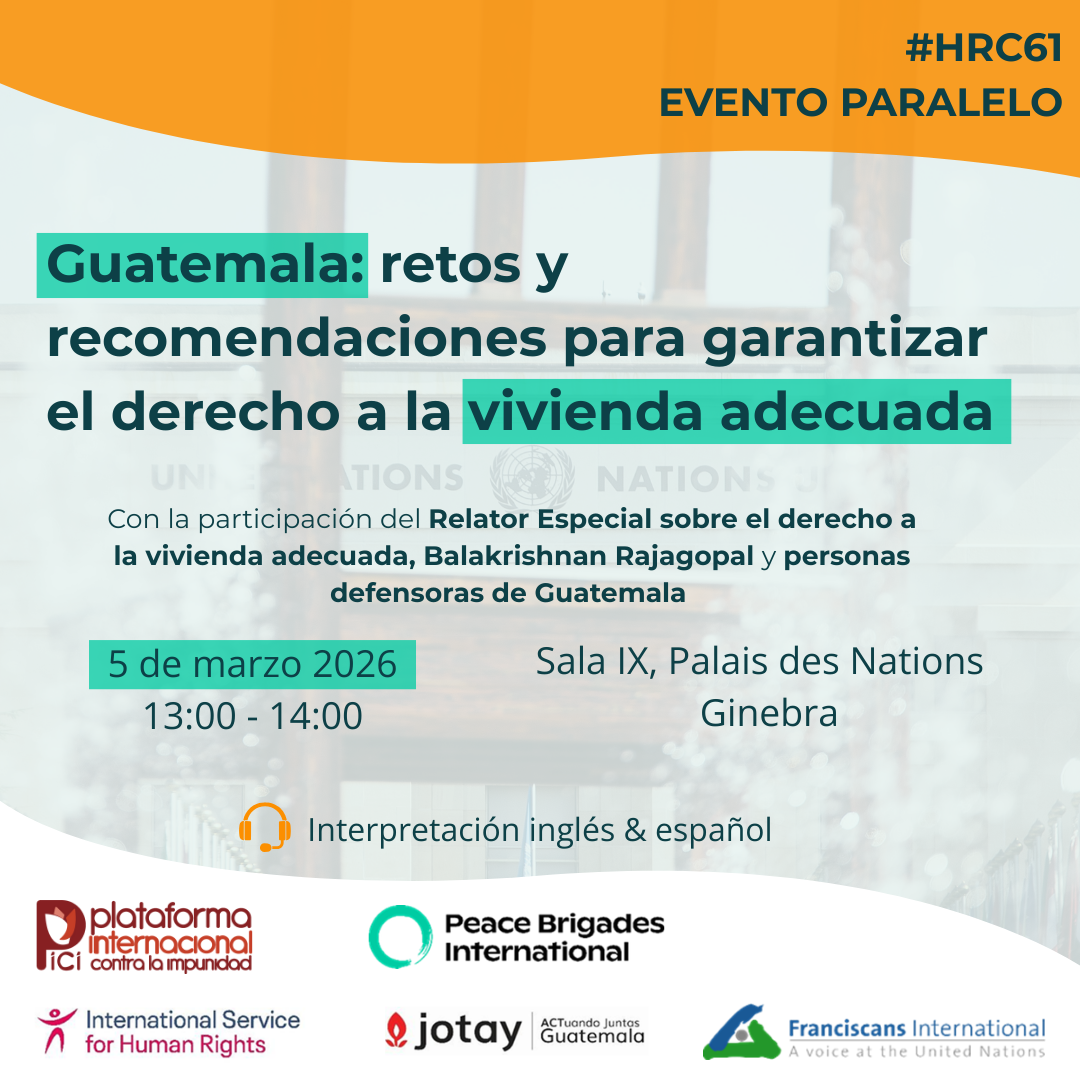
PBI, in cooperation with ISHR, PICI, Jotay, and Franciscans International, will hold a side event entitled “Challenges and Recommendations for Guaranteeing the Right to Adequate Housing” (English and Spanish interpretation available) on March 5 at 2 p.m. at the Palais des Nations.
This event will feature the participation of the Special Rapporteur on the right to adequate housing, Sandra Calel; representative of the Verapacense Union of Peasant Organizations, Rigoberto Juárez Mateo; ancestral authority and coordinator of the plurinational ancestral government, Luz Emilia Ulario; former mayor of Santa Lucía Utatlán; and will be moderated by Yannick Wild of PBI.
Intervention on Guatemala
During the presentation of the Special Rapporteur on the right to adequate housing, PBI delivered an intervention expressing concern about recent evictions and the situation of communities defending their land and territory in Guatemala. The organization denounced the excessive use of force in evictions such as that of the Maya Q’eqchi’ community of La Ceiba, as well as the criminalization of human rights defenders and the persistent high levels of violence against those protecting land, territory, and the environment.
PBI supported the recommendation to establish a moratorium on evictions and to reform legislation on land usurpation in Guatemala, and urged the State to implement effective dialogue mechanisms to resolve land conflicts.
Honduras
Human rights context in Honduras
Honduras has made very limited progress since the last Universal Periodic Review and continues to have unresolved structural problems that disproportionately affect human rights defenders, women, indigenous peoples, young people, and rural communities.
The National Protection Mechanism (MNP), created by the government, remains inaccessible, ineffective, and independent. Following the deaths of Berta Cáceres and Juan López, the killings of environmental defenders continue. In 2024, of the total 319 victims recorded by OHCHR, 47% were land and environmental defenders, with threats from state authorities, business elites, extractive companies, or organized crime.
Women defenders, especially indigenous women, face heightened risks in a macho context. Honduras has one of the highest rates of femicide in the world, with one woman murdered every 24 hours. Systemic corruption, institutional capture, and judicial fragility erode access to justice, generating impunity and discouraging reporting. Restrictions on civic space target actors who challenge economic or political interests; the extractive and agro-industrial development model lacks prior consultation and meaningful participation, leading to criminal prosecution, stigmatization, and violence against those who defend the territory.
Honduras in the Human Rights Council
At this session of the Council, the Office of the High Commissioner will present its annual report, detailing its activities in 2025 and the human rights situation in Honduras. This presentation will be followed by a General Debate where States and civil society will be able to express their views.
Within the framework of the HRC61, the Universal Periodic Review on Honduras will be adopted. Honduras has yet to decide whether to adopt or note 243 recommendations focused on ensuring the effective protection of human rights defenders, combating impunity through independent investigations, strengthening institutional independence, ensuring credible elections, addressing gender-based violence, and resolving territorial and environmental conflicts in accordance with international standards, among others.
Nicaragua
Human rights context in Nicaragua
The worrying authoritarianism of the Ortega-Murillo government has eroded the rule of law, abolishing judicial independence through constitutional reform (2024/2025). Fundamental civil and political freedoms are restricted, and dissidents, journalists, and human rights defenders are subject to arbitrary arrests without due process.
The Nicaraguan government is pursuing a deliberate policy of silencing dissent both inside and outside the country and consolidating absolute power through violence. The growing number of enforced disappearances is deeply disturbing, as recently reported by the UN Working Group on Enforced Disappearances. The UN Group of Experts on Human Rights in Nicaragua (GHREN) has documented forced disappearances and death threats, as well as expulsions of critics, deprivation of nationality, and denounces the serious number of transnational violations of human rights committed against people in exile, or, as in the case of the murder of activist and opposition figure Roberto Samcam in Costa Rica. Some documented violations constitute, prima facie, crimes against humanity. All this, without forgetting the great vulnerability and threat to the integrity of the indigenous and Afro-descendant peoples forced to move to Costa Rica.
Experts also pointed to Nicaragua’s unprecedented withdrawal from five key UN agencies, as well as from the Human Rights Council, as part of a strategy to evade scrutiny and consolidate impunity.
With regard to civil society, the Reflection Group of Former Political Prisoners prepared a report on the persecution and stigmatization experienced by former political prisoners after their release from jail.
In its report covering the period 2018-2024, the University Coordinator for Democracy and Justice identified repression and persecution of students and professors; the closure of universities for political reasons; the denial of academic documentation to students who have been forced to abandon their studies; and disrespect for university autonomy.
The feminist collective Las Malcriadas, in coalition with the Autonomous Women’s Movement, denounces in its latest report the state’s lack of interest in combating gender-based violence, which has caused 341 femicides and more than 20,000 incidents of sexual violence in the period 2020-24.
Nicaragua in the Human Rights Council
At the end of October 2025, the GHREN called on the international community to hold the Nicaraguan government accountable for serious human rights violations and international crimes when it presented its findings to the General Assembly for the first time.
In its work to promote and protect human rights in Nicaragua, the Council has renewed the mandate of the UN Group of Experts on this country, which will present its comprehensive report (A/HRC/61/56) during HRC61. March 16 is the date of the interactive dialogue with states, experts, and observers. The progress made on previous recommendations addressed to the Government of Nicaragua will be evaluated.
Side event on Nicaragua
On March 17, 2026, at 3 p.m., the side event “Nicaragua: Impact of arbitrary detentions and enforced disappearances on human rights” will take place. It will examine recent patterns of arbitrary detention for political reasons, including enforced disappearances, violations of due process, and restrictive release regimes, as well as their differentiated impact on vulnerable groups and the families of detainees, within the current human rights crisis since 2018.
It will feature testimonies from Kevin Solís, a former political prisoner exiled in Madrid, where in November 2025, he was threatened with a firearm, and Thelma Brenes, daughter of Carlos Brenes, a political prisoner who has been missing since August 2025. There will also be three representatives from the Mesoamerican Initiative of Women Defenders (IM-D), the Legal Defense Unit (UDJ), and a CNN+ journalist who follows Nicaraguan current affairs, as well as an expert from the Group of Experts on Human Rights in Nicaragua (GHREN), who will offer a perspective based on the findings of the mandate.
Report on Human Rights Defenders
Thematic Report
The Special Rapporteur on human rights defenders, Mary Lawlor, published her thematic report Defending dignity and claiming rights: human rights defenders stand firm on universal values while others turn their backs. The report describes a profound crisis in the international human rights system and, in particular, in the situation of those who defend human rights, as the international protection system is also in a structural crisis, with slow and limited mechanisms. Democratic backsliding, growing repression, and a lack of state commitment to international law have reduced civic space in a context where at least 625 murders or disappearances of defenders and journalists were recorded in 2024, the highest known figure.
The crisis is exacerbated by severe funding cuts in 2024 and 2025, which have weakened organizations’ protection, psychosocial support, legal assistance, and monitoring capacity; 77% of defenders report having been affected. At the same time, many States are restricting access to resources and criminalizing international cooperation. Although international human rights standards remain a moral and legal reference point for defenders, their credibility is increasingly being questioned in the face of the international community’s uneven responses to serious crises and the lack of effective implementation.
The Special Rapporteur proposes urgently strengthening the protection system for human rights defenders. Her recommendations are aimed at ensuring that States effectively comply with international law, guarantee sustainable funding, and put an end to laws or practices that criminalize civil society. She also stresses the need to strengthen international mechanisms, make them more accessible, rapid, and effective, and improve their coordination with local protection networks.
Intervention by PBI
During the dialogue with the Special Rapporteur on the situation of human rights defenders, Mary Lawlor, during the presentation of her latest report, PBI highlighted that the defenders it accompanies continue their work despite increasingly complex contexts. It noted achievements such as Colombia’s Law on Women Searchers, the historic ruling protecting community journalist Norma Sancir in Guatemala, the inclusion of Mexico’s Ministry of Environment in the Protection Mechanism, and the work of the Mathare Social Justice Centres in Kenya. It also noted that human rights work in Nicaragua continues even from exile.
PBI stressed the need to strengthen protection networks and policies, including implementing collective protection measures such as Decree 660 in Colombia, ensuring resources for Guatemala’s protection policy, reinforcing Mexico’s Protection Mechanism, and advancing a national protection policy in Kenya. It also called for attention to transnational repression and more accessible dissemination of Special Procedures communications.
Renewal of mandate
The Human Rights Council will discuss the renewal of the mandate of the Special Rapporteur on human rights defenders at this session. In 2023, the membership of the Council adopted the renewal of the mandate by consensus in resolution HRC/RES/52/4.
In addition, a new chair will be elected during this session to succeed Mary Lawlor. The advisory group recommended three candidates, first and foremost Colombian political scientist Andrea Bolaños Vargas. She has been a senior consultant for various United Nations agencies and country teams, such as UN Women and the Office of the Resident Coordinator in Panama and Guatemala, as well as accompanying civil society organizations in Latin America in their advocacy work with various United Nations treaty bodies and the Universal Periodic Review. She has worked with the Guatemalan Women’s Movement T’zununij’a in developing indicators to monitor the recommendations of CEDAW and the UPR (2018).
The other candidates are Onesmo Olengurumwa, Founding National Coordinator and Secretary of the Board of Directors of the Tanzania Human Rights Defenders Coalition (THRDC) in the United Republic of Tanzania, and Sarah Leah Whitson, Executive Director of DAWN in the United States of America.